Homeschooling preschoolers: life is the curriculum

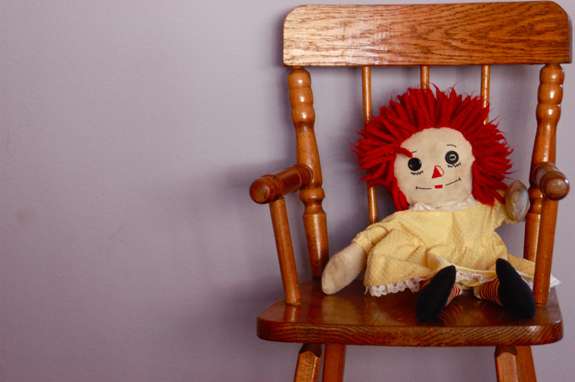
Homeschooling Preschoolers: Life Is the Curriculum ~
Written by Sarah Baldwin of Bella Luna Toys
When I am asked by those who are homeschooling preschoolers to recommend a curriculum for their 3- to 6-year olds, I tell them, “Relax! Life is the curriculum for the young child.”
Young children will learn everything they need to know and be prepared for formal learning later by participating in family life, household tasks and receiving nurturing care.
Being conscious of what children need to grow in body, mind and spirit, allows you to provide them with everything they need during these early years through daily living.
Ideas for Homeschooling Preschoolers from Waldorf Education:
Domestic Arts
As homeschooling mamas, you know how challenging it can be to get dishes done, laundry washed, meals made, and the house cleaned. It’s easy to feel like these chores need to be done in addition to homeschooling, which can feel overwhelming.
Children love to imitate the work of the adults around them. By understanding the imitative need of young children, we can include them in our daily tasks.
- Allow time for your preschooler to help prepare meals, wash dishes, hang laundry, sweep the floor and so on. Many parents don’t realize how capable young children are of doing real work for a real purpose.
- Provide them with real child-sized cooking and cleaning tools, so they can really help, and not just pretend to.
- Cook with natural, healthy whole foods. In doing so, you have the opportunity to teach them about nutrition and where food comes from.
Not only are children learning practical life skills, but they also gain self-confidence through helping. Chores like chopping vegetables help develop fine motor skills, and big jobs, like sweeping, develop large motor skills.
Realize that children are learning math when they practice measuring and counting ingredients. They are introduced to scientific concepts like substance transformation and chemistry through baking.
Imaginative Play
You’ve probably heard it said that “play is a young child’s work.” In Waldorf education, it is believed that imaginative play in early childhood leads to creative thinking later in life.
In a Waldorf early childhood classroom, ample time is allowed each day for imaginative free play, which is considered the heart of the morning.
Studies have shown that children who attend preschools where imaginative play is emphasized (think playing house, dress-up, and role-playing) actually perform better when they reach grade school – both academically and socially – than children who attended more academic preschools which emphasize reading and math.
Natural toys that are open-ended will encourage children to play imaginatively. For instance, a basket of shells or wooden tree blocks can become money, dishes, play food, and so forth.
Music
Not only does singing bring joy and lightness to our days, but learning songs also helps develop vocabulary and language skills.
Singing through the day is a wonderful way to ease transitions, and to use while working.
For a wonderful collection of songs to sing while cooking, cleaning and so on, I highly recommend This is the Way We Wash a Day by Mary Thienes Schunemann.
Movement
 Photo by Phil Romans
The importance of movement for young children cannot be over-emphasized. Brain research has proven the direct connection between movement – both small and large – and a child’s brain development.
Allow plenty of time outdoors every day for active play. Activities like jumping, climbing, swinging, sliding, climbing trees, and building snow forts may look like play, but it’s important to understand that these activities are actually strengthening your child’s brain and preparing him for lifelong learning.
Nature
 Photo by nicoleta gramada
Spending time outdoors through all seasons observing nature provides your science “curriculum.” There is no need to give a child scientific explanations of the processes of nature, which are abstract and meaningless to a young child.
- Encourage your child’s sense of wonder, awe and reverence for nature. Let him marvel at the changes she notices throughout the season.
- Collect items found on your nature walks and display them on a “nature table” at home.
This sense of wonder will lead to curiosity about the natural world and a desire to learn more, as he gets older.
Games
Games are fun, but there is so much to be learned through game playing!
Classic physical games such as jump rope not only help develop a child’s body and brain, but through reciting rhythmic jump rope rhymes, a child is also developing memory and language skills.
Traditional circle games such as “Ring Around the Rosey,” or “Duck Duck Goose” help children develop social skills, like learning to take turns.
There are many great cooperative board games to help develop logic, language, sequencing and so on.
Competitive games with winners and losers are very difficult for children under five to handle, and often lead to crying or cheating because of a preschooler’s strong desire to win. On the other hand, cooperative games allow everyone to work together toward a common goal.
Artistic Activities
Painting, drawing, handwork, and crafts help develop a child’s fine motor skills.
Again, neurological science has shown us that the nerves in the fingertips are directly wired to the brain, and by developing a child’s small motor skills through these activities, neurological pathways are being formed and strengthened, which lead to an increased capacity for learning.
By living life consciously and with purpose, and by including our children in daily living, “Life” has more lessons to teach our children than even the most prestigious packaged curriculum could ever hope to provide.
Are you homeschooling preschoolers? What activities will you fill your days with this coming year?
Originally published on September 9, 2011.


Oh, how I wish that I had had this guidance when we were in the preschool years – I was thinking recently about how much I would have done differently – and just played more! Thanks for posting this information for homeschoolers of young ones.
and with a deep sigh of relief and boost of confidence, i say, thank you 🙂
You are so welcome!
Thanks for this. My oldest two children went to a great preschool, but we’ve chosen to not send my 3rd child. My friends are aghast–she won’t be ready for school!
But we run a pretty interesting, intelligent household, and I think she’ll learn more from me than she would in even the best preschool! And the best preschools think kids learn by experience, not by worksheets. Just like they learn at home!
So true, Anne. The best preschools do teach by experience, and include lots of time for free play and movement. All things that we can easily provide at home.
What a great list of ideas! I will be using these this year definitely 🙂
Thanks for this post! My oldest 2 are 3.5 and 2, so this is exactly what I need. All of my son’s friends have started going to school this week, and I’ve already been feeling like I need to prove that my son can learn just as much as their kids (just my own insecurities..nothing to do with anything my friends have said.) This is wonderful encouragement that it’s OK to just have fun!
Thank you for this insight! It’s amazing, but no matter how many times I “realize” this truth, I am swayed by curriculum and theories that seduce me into over-planning, over-organizing, and over-scheduling. Thanks for the reminder to slow down and let them be little! At 2 and 4, we can afford waiting for academics and concentrate on character development.
Love this post. I’m home alone with a toddler for the first time in years. We’ll attend storytime this fall and maybe a music class. Even though I know better, I’ve managed to work myself into a little frenzy over what I “should” be doing with her even though I know that the life we lead provides all she needs.
It’s very easy to fall prey to all the “shoulds” society throws at us. While I was homeschooling my two boys, I always felt like I should be doing more, and that they weren’t learning what they should.
Only after they returned to school did I realize how much they had absorbed and learned during that time. In hindsight, I wish I could do it over again. If I could, the second time around I would know to RELAX and savor every short-lived moment!
This is great! Thank you. My oldest turns 4 next month and I’ve been wondering when I need to start “formally” homeschooling him. He is def a hands-on learner so this is perfect!
This information is so true. I have a very hard time convincing parents that this is “enough” though. The people that I work with often think that they still have to buy a curriculum. I’ve even written several ebooks on the subject to help parents see what they can do with their children. Hopefully people will read this post and understand that sometimes children can learn more from this method than they can from a curriculum.
This couldn’t have come at a better time. Thank you for the assurance that my husband and I made a good decision when opting not to request nursery/preschool applications this past week. A decision I actullay addressed in my recent post “nursery school nuttiness” at TheActorsWife.
Thank you!
Sounds like you made a very good decision! Always trust those motherly instincts. They will rarely lead you astray.
We are just getting started and I am loving your ideas, thanks!
I am so glad to hear this! I keep thinking about how, as a society, we keep trying to school our kids younger and younger. My nephews are very bright and ended up going to two years of pre-school because there is no pre-pre-school. I just bristle at the idea of a 3-year-old in a classroom setting.
Like most have said, thank you for this! I have two at home, ages 3 and 1, and literally every one of my friends has their children in some kind of preschool, even younger than 2. I cannot imagine sending my oldest away, yet it is hard not to question/second-guess your choices when they seem so backwards compared to others (but I guess comparison is part of the problem!). I hear “socialization” often cited as an argument for more classes, preschools, etc. Have you addressed this in previous posts? I would love to hear more about socialization and the family (obviously playdates with friends too). In any case, this was hugely encouraging and timely. Thank you!
This is such an excellent post. I have so many folk ask me what I do with my little people while teaching my older kids… What are my favorite workbooks!!! Honestly my little people are so busy living that they don’t have time for workbooks. They are busy all day just doing stuff. I think it is important that they have tools available for their job and let’s face it their job is playing and playing full time!!!
I have published a snapshot of what my little guys get up to before : http://www.se7en.org.za/2010/11/12/homeschool-question-what-do-little-people-do-during-school
I love this so much, I’m going to link it on my blog tomorrow. (Not that my handful of readers will generate much traffic here, but I do love keeping track of things I love as the weeks pass…makes it easier to find them later on.)
We are starting “school” next week. Not because I think my daughter needs a curriculum, but because my home state (New York) requires a ridiculous level of planning and record-keeping and reporting, and I want to be sure that by the time it is required, I’ve got the hang of it. So I’m planning a little – a theme each week, and a story and fingerplay and craft and sometimes a special snack to go with the theme. But mostly, yes – life is her curriculum, because what else should a three-year-old be doing besides playing and singing and painting and drawing and spending time with Mama?
Thank you for this piece. I am also alone among my friends in keeping my children at home past age two & I *know* everything you’ve written here, but it is nice to read it coming from someone else. xo
Thanks, Meghann. I think that we all *know* this in our hearts. It’s just easy to forget.
I’m here to remind you!
Perfect, thank you! Life IS the curriculum, I needed a reminder. I’m pregnant and home with my 31 month old. I need to get her more involved in the day to day things, I know she enjoys it!
Wonderful post! I have two young boys, and this is exactly what I do with them. I don’t understand people who stress over a curriculum for the early years.
I love this age! There is so much to discover! Each and every day, in everything you do, they see wonder! Great post!
Bernice
My 4 yr old started Kindergarten this week and I am so unhappy. I am seriously considering homeschooling, but there is one main obstacle I face. He is an energetic, excited, and lively boy and I wonder if he won’t get “bored” having only me and his 2.5 yr old sister to play with. Maybe he does need a room full of other kids to play with, run around with, share, sing songs, etc. How much fun will my circle time be if its just me and the two kids? I’m so torn…
I have an active 4 year old that I’m homeschooling, now in our 2nd year. He definitely doesn’t get bored – because it is just us, he gets to move at his pace and do the things he wants to do, even if they don’t fit into a curriculum or seem age appropriate (like when he was 3 1/2 and became obsessed with the Titanic). We also have a 2 year old younger brother, and the bond between them continues to grow. As a mom, it is really special to watch the 4 year old “read” one of our favorite stories to the 2 year old. We go places and are involved in a couple programs – probably 4 hours worth of activity a week (Sunday School, Awana, karate, and swim class) that provide the classroom environment/social skills everyone gets worried about. My 4 year old is very shy, but I think he would be that way even in a regular classroom.
The last thing I will mention is that when I watch kids in groups together, how much do I really want my kids picking up from the group? Yeah, there are great kids in there, but my kid is more likely to pick up armpit farts than observations in kindness from the group. All of these kids are still learning the social skills we desire for them – so are they more likely to learn from a strong parental role model, or from a group of kids that are still learning?
It is not the nature of a 4-year-old to be bored! If you allow time for active outdoor play. Personally, I find circle time at home with only 2 or 3 children a little unnatural. Rather, find ways to incorporate singing, movement, and verses into your days.
If you find times during the week to get together with other children of mixed ages, he will get all the socialization he needs. For some energetic children, being in a group of children all day every day can be overstimulating.
Hope this helps!
Oh, I love your thoughts – so holistic, true and yet totally practical. They ring true so loud and clear and resonate with me. I have believed in this philosophy and never bothered much about a curriculum for my 5.5 year old daughter. And yet, when I see so many homeschooling moms contemplate so much about curriculum, I sometimes wonder if I am being ignorant. Reading your article definitely restores my belief and confidence. Thank you for this wonderful article. 🙂
I’m so glad you found the piece helpful, Rashmie. Thanks for saying so!
Beautiful post full of so much reassurance. I am homeschooling my 2 children (who are just 3 and almost 2.) I am alone all day everyday with them and worry that they spend too much time watching me cook, clean and do laundry. My older child is getting more involved in helping each day and also loves to do focused activities by herself such as beading, puzzles, painting, drawing, sensory tubs and cutting. My younger child for the most part watches us but I think this sometimes frustrating as he wants to be involved too – it’s sometimes a challenge to find an activity to engage him in that will not end up being a monstrous amount of cleaning up for a very short time of play. (Any ideas for pre-pre-school?)
My goal each day is to get organised enough to go out for a long afternoon walk or other outdoor activity – the nature connection is a vital part of their learning for sure. Thanks again for this post…I enjoyed it so much that I linked to it from my f/book page and tweeted it too!
Your two-year-old can help, too, Terri! Let him imitate the work that you and your older child are doing. Give him small tasks. For instance if you are folding laundry, give him a washcloth to fold (or simply play with).
Provide him with play kitchen toys that will allow him to imitate the work going on around him. As he gets older, he will grow more capable.
Thanks for the encouragement that we’re doing things right. I find myself saying a lot that homeschooling this age is simply conscientious parenting. It is being willing to let things take longer to involve little kids rather than do it at our speed just to get it done, reading books when we’d rather tuck in bed, letting them help with dishes when we’d rather put them in front of the TV and do the dishes ourselves, and hauling out the fingerpaint when we know it is going to involve a bath later.
You got it, Emily! It is so often easier to do things ourselves. I always advise parents to allow enough extra time to allow preschoolers to do things for themselves and to be able to help, which is hard to do if we feel rushed.
Dear Sarah,
What a delightful summary of LifeWays Care! It is wonderful to see this traditional yet revolutionary understanding take hold in the face of such modern pressure.
Susan
LifeWays Northeast Early Childhood and Human Development training
Rockport, Maine
I have looked at Oak Meadow. I’m not going to get their preschool curriculumn but I do want to read The Heart of Learning to get some insight on how they learn. In the future, I do plan to use OM as they are Waldorf-inspired. I have also read Rahima Baldwin and Oppenheimer’s work and learned a lot from it!
This article and the comments below it literally brought tears to my eyes. Thank you so much for sharing it, and thanks to all those other mamas out there who responded so positively. It’s nice to feel like I’m not alone. The outside pressure to send my daughter to preschool (she’s 4 1/2) is incredible. I’m so happy to know that there are other people who believe in the beauty and worthiness of simplicity and home-life.
Just pinned/tweeted/FB/and stumbled this post! So refreshing and so reassuring! Thanks so much for helping me not feel so inadequate as a mom to 4 four year olds who are living and learning life.
These homeschooling words of wisdom having resounded with…and relieved so many mothers worries expressed in the voices commenting here. Mothers can be their own child’s most wonderful teachers and here you’ve shared the means and confidence that they can be. Nicely written, Ms. Baldwin.
My daughter is 2 and I am thinking I will probably homeschool her. I had started wondering when is a good time to start, if I should create more structured learning times in our days to get her used to that. I have been trying to get her more involved in helping around the house, she likes to help. And making an effort to offer her more creative crafting time. I think my biggest concern is that she isn’t around other kids as much as I would like. I take her a couple times a week to a drop in playgroup but otherwise she is with me and her grandparents. I think this year I will get her involved in a few other out of the home activities. Thank you for this post though, it solidified some of my thoughts and gave me some new bits of inspiration…and that’s what it’s all about right?
I have been worried that I wasn’t doing enough with my two year old. My sister sent me this link & it was very encouraging. Thank you
Thank you for this post! When I started homeschooling my then 3 year old my husband was shocked that I didn’t think math and reading were necessary, and simply let him play. Now two years later we have started kindergarten and my youngest is starting preschool. They have lots of opportunities to play together, we sing we do crafts and they “help” me with the house work. It is amazing to me how much they have learned in such a short time and I am reallyg lad I followed my instincts and let them just be boys. The world wants them to grow up far faster than I like, their dad has come around largely due to posts like this one. Thank you!
This is a great reminder! I have a 4 year old and 2 year old, and they are both very interested in helping me with whatever I am working on during the day – especially the cooking! This past month I worked a lot on saying yes when they wanted to help, or when they wanted to do messy crafts during the day. Sometimes I just want to get things done, but my kids learn so quickly if I just let them! Add in excessive amounts of reading, and there is our homeschool in a nutshell!
Oh, what wise and wonderful words — not only for the homeschooling parents, not only for parents of pre-schoolers — but for anyone who values genuine education as opening the mind, eyes and heart to the world.
This brings to mind one of my favorite quotes is from Albert Einstein, “Logic will get you from A to Z; imagination will get you everywhere.”
Just recently, I posted “What She Did Not Learn In School Today,” —
http://winebeforefive.com/2012/11/02/what-she-did-not-learn-in-school-that-day/
and last year I wrote of my own journey into being an accidental homeschooling mom of preschoolers with
“Walter & Wilma, Pre-School Drop Outs,” —
http://winebeforefive.com/2011/11/02/walter-wilma-pre-school-drop-outs/
Our children — all humans & all creatures — want to learn; it’s an integral part of the heart and mind.
We need to allow them, to encourage them, and learn from them by stepping back and seeing how they accomplish learning when rigid rules, structure & pre-conceived ideas are removed from their paths.
Thank you for a wonderful, wonderful post!
Emma Ann Weatherly
I love that life is a wonderful teacher. Kids learn so much more than we give them credit for…they learn in spite of us.
On cold days or rainy days, we use Learning Games for Kids. They have really good educational games , songs, and videos. It’s not just fluff, plus it’s free. Gotta love free!!
Here is the link for preschool (http://www.learninggamesforkids.com/preschool_games.html)
Joyfully,
Jackie
Dear Sarah,
Thank you for this post.
I am a childcare provider (8 years) and have been pondering changes to my curriculum as of late. My curriculum seems to work well for the children; they go off to kindergarten appearing to be well-prepared. However, in the push to compete with center-based preschools, I am wondering if some of the inherent assets of being a home-based program are being pushed off to the side? As I have moved into circle times, setting up centers, and creating activities in hopes to appease families with what appears to them as true preschool work, we have greatly reduced our time in the kitchen, true-to-home-life experiences, and general spontaneity. The children seem overly dependent on me to provide activities and find constructing their own quality play, difficult.
I want to put the “home” back into home child care while still demonstrating to families that their children are indeed getting a quality, preschool “education.” My fear is that if they perceive this as not a “real” education, that the will remove their children for preschool centers.
Some providers may not care if their child care children only stay through toddlerhood but to me, these kids are family. I love them and want them around as long as possible. I invest a lot of care, time, energy, and heart into these little people. I stay awake at night wondering how I can give them all they deserve. I don’t want to loose them to the institution that is now public education.
I really want to comment on this topic. I am still learning a lot and trying to balance a busy home life, having my first son, and being in college. I work with him a lot at home, and he is 11 months now. I have been teaching him early on, letters, numbers, counting, addition, subtraction, sounds, shapes, colors, sorting, flashcards, word cards, everything really… I try to fit in art and other more practical things but education is mainly a top priority. He definitely goes over his alphabet multiple times daily but I have only painted with him maybe 3 times. So I am trying to find out about learning material for early pre-homeschooling him. Am I doing it all wrong? How do you balance playing and learning new things. Don’t you think its easier if a baby learns how to read while they learn how to talk? I certainly understand and value activities, free play, and experiences but what if you are sitting on a mathematical genius… why wouldnt you want to nurture that also? If children can learn then what benefit is there to wait and focus on other things? And do children that learn early have any benefit over other children? do they advance sooner? I was extremely advanced in kindergarten and was considered for skipping 1st grade and second, along with being in “gifted” classes. I know that as a student in my first 4 yrs I probably would have excelled better if I was home-schooled but my mom didn’t know anything about that. Please someone help me to understand your perspective. I would love to speak with someone about this. Feel free to call or email me 937-530-3010
Thank you for this wonderful post. Really brighten me up. Love it. Am going to link it in my blog.
Wonderful read. So happy to have been introduced to Sarah. I am going to use the different sub-headings to organize our days at home next year. Thanks!
Best and most lovely explanation of homeschooling.
Thank you 🙂